5 Reasons Floor Coatings Fail (And How We Prevent Every One)
Why garage floor coatings peel, yellow, and bubble. Surface prep failures, wrong products, moisture, thin application, and bad conditions explained.
5 Reasons Floor Coatings Fail (And How We Prevent Every One)
1. Skipping Surface Preparation
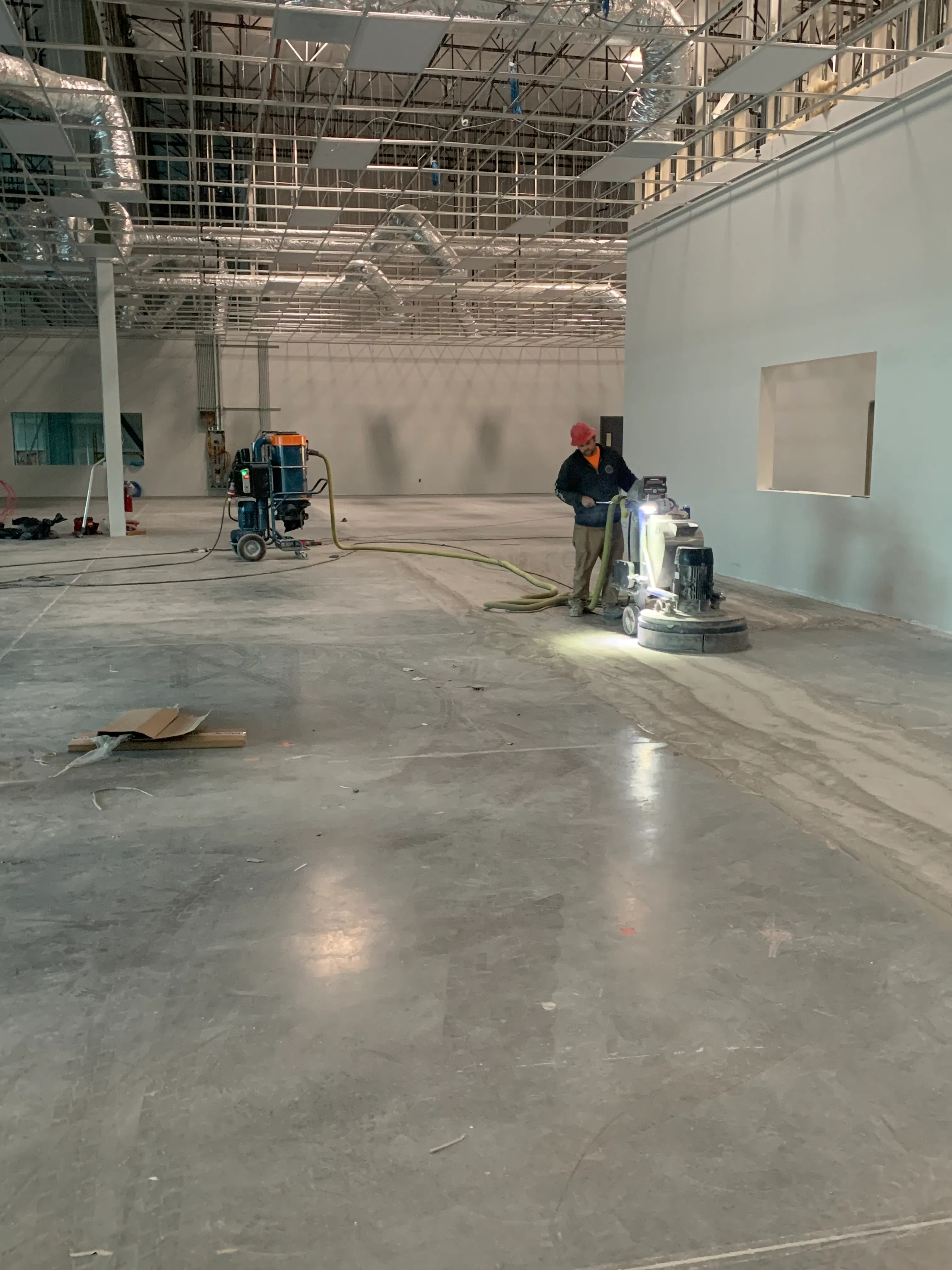
The #1 reason coatings peel. Concrete has a smooth, sealed surface called laitance that prevents adhesion. Without industrial diamond grinding to remove it and create a mechanical bond profile, any coating is sitting on top of concrete — not bonded to it. DIY kits include acid etch, which is not a substitute. We grind every floor with commercial planetary grinders until we see aggregate exposure across the entire surface.
2. Using Epoxy in UV-Exposed Areas
Standard epoxy resins are not UV stable. In Arizona — where garages get indirect UV all day and patios get direct sun — epoxy yellows, chalks, and becomes brittle within 6–18 months. Polyaspartic resin is inherently UV stable. We use it as both the base and topcoat specifically because it holds color and clarity permanently in desert sun.
3. Ignoring Moisture Vapor
Concrete is porous. Ground moisture migrates upward as vapor. If a coating seals the surface without addressing vapor transmission, the moisture pushes the coating off from below — causing bubbling and blistering. We test every slab with a calcium chloride moisture kit before coating. If levels are elevated, we apply a moisture mitigation primer that allows vapor to pass through without delaminating the coating above it.
4. Applying Too Thin
Big-box epoxy kits apply at 3–5 mils thick. Our system goes down at 15–25 mils. The difference matters. Thin coatings can’t resist hot tire pickup because they soften under heat and the tire pulls them up. Thin coatings also wear through in traffic paths within a year or two. Thickness is directly correlated with longevity and performance.
5. Wrong Conditions During Application
Concrete temperature, ambient humidity, and dew point all affect how coatings cure. Applying in direct sun, on a hot slab, or when humidity is dropping rapidly causes outgassing — bubbles trapped in the curing film. We monitor conditions on-site and time our application to the optimal window. In Arizona summers, that means early morning starts.
Want It Done Right the First Time?
We’ve seen every failure mode and engineered our process to prevent them. Get a free quote.
Best system for your garage/patio (epoxy + polyaspartic options)
Transparent pricing + timeline
Local team — no spam, no pressure